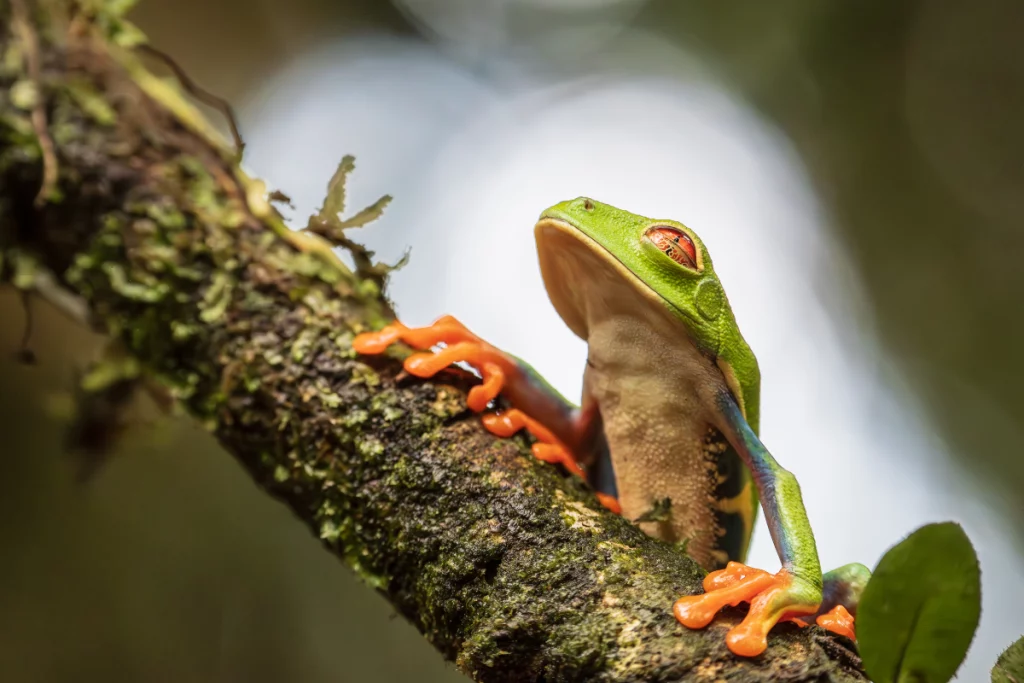

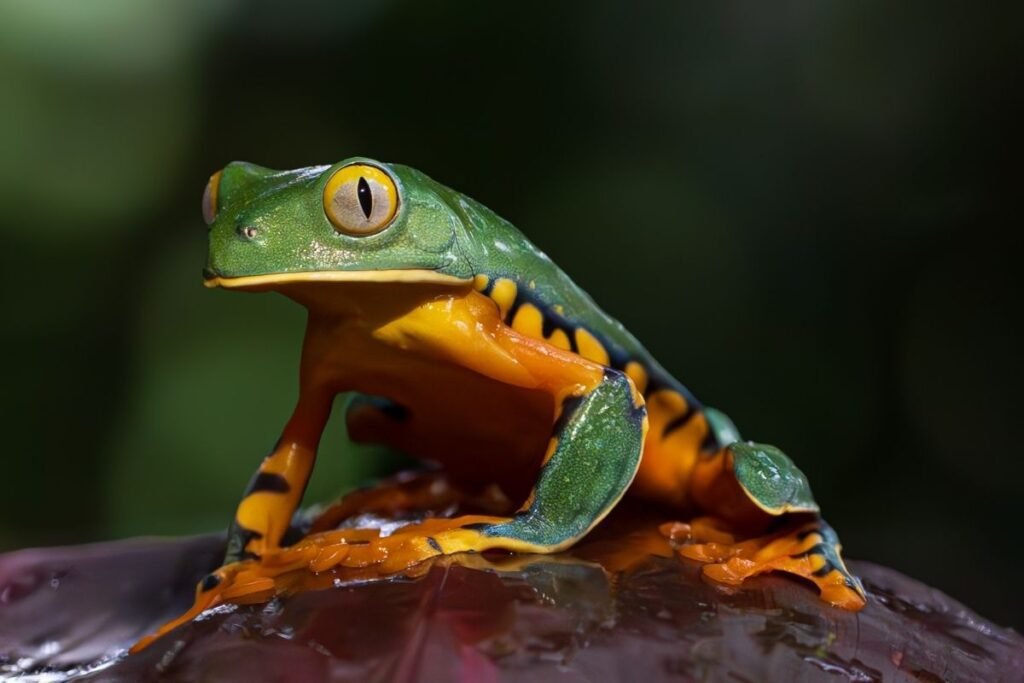
A Costa Rica herping photography tour is designed for reptiles and amphibians, usually combining humid rainforest, careful night walks and close-range technique. The strongest program uses trained local guidance, never promises species, avoids handling wildlife for convenience and gives photographers time to work safely in rain and low light.
1. What Herping Photography Involves
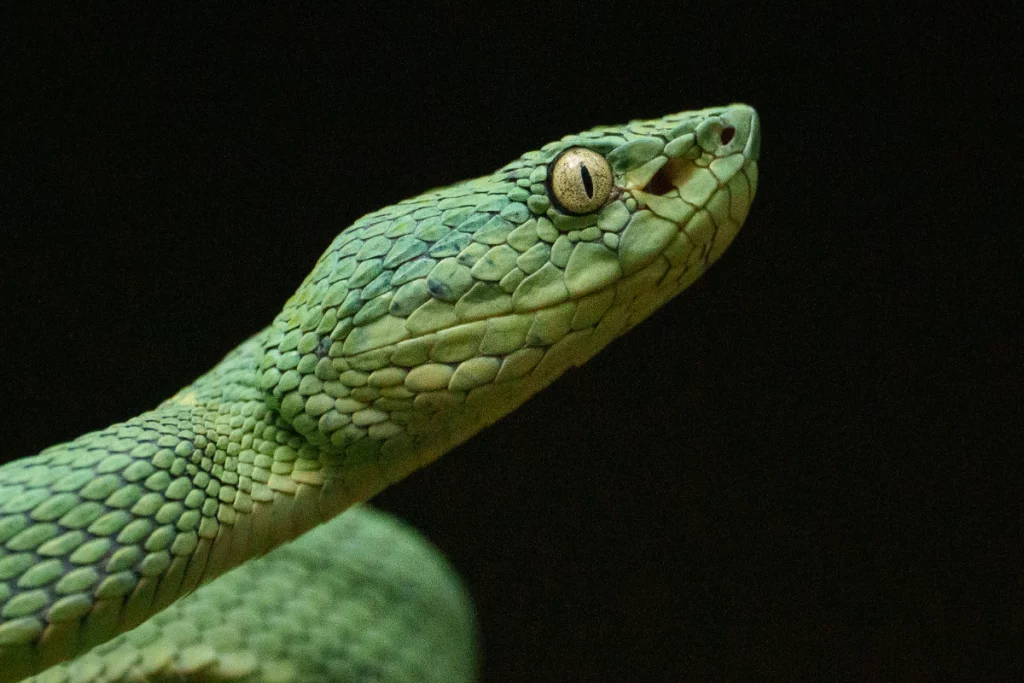
Herping focuses on reptiles and amphibians: frogs, snakes, lizards, salamanders and other small forest subjects. Many are more active or easier to locate after dark, so sessions differ from conventional wildlife tours. Progress is slow, trails can be wet, and the guide must balance searching, identification, safety and the welfare of each animal.
2. Choose Habitat and Timing
Caribbean-slope lowlands and foothills, including Sarapiquí, offer humid forest and strong macro potential. Cloud forest adds different species and cooler conditions. Regular rain can increase amphibian and invertebrate activity, but activity still depends on recent weather, elevation and habitat. A flexible itinerary can move a night session or combine it with daytime macro work.
3. Bring a Practical Night Kit
- A macro lens around 90–105 mm for a useful working distance.
- A diffused flash or compact continuous light used responsibly.
- A headlamp plus backup light, with spare batteries.
- Weather protection and a dry storage system.
- Closed, high-traction footwear and clothing suitable for wet trails.
- A small support or beanbag only when it can be deployed without damaging habitat.
4. Photograph Safely and Ethically
Do not touch, move or stage an animal for a cleaner photograph. Keep hands away from unknown species, follow the guide’s position and never step off trail without instruction. Limit repeated flash, watch for stress behavior and leave the subject where it was encountered. “Controlled environment” should never mean manipulating wild animals.
5. Integrate Herping Into a Private Itinerary
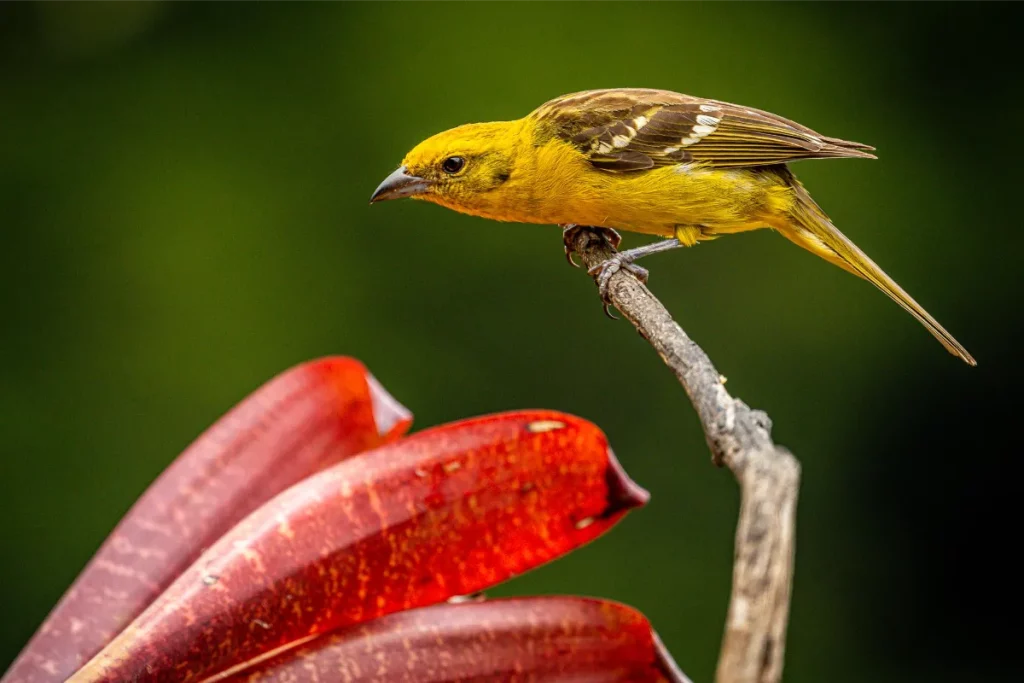
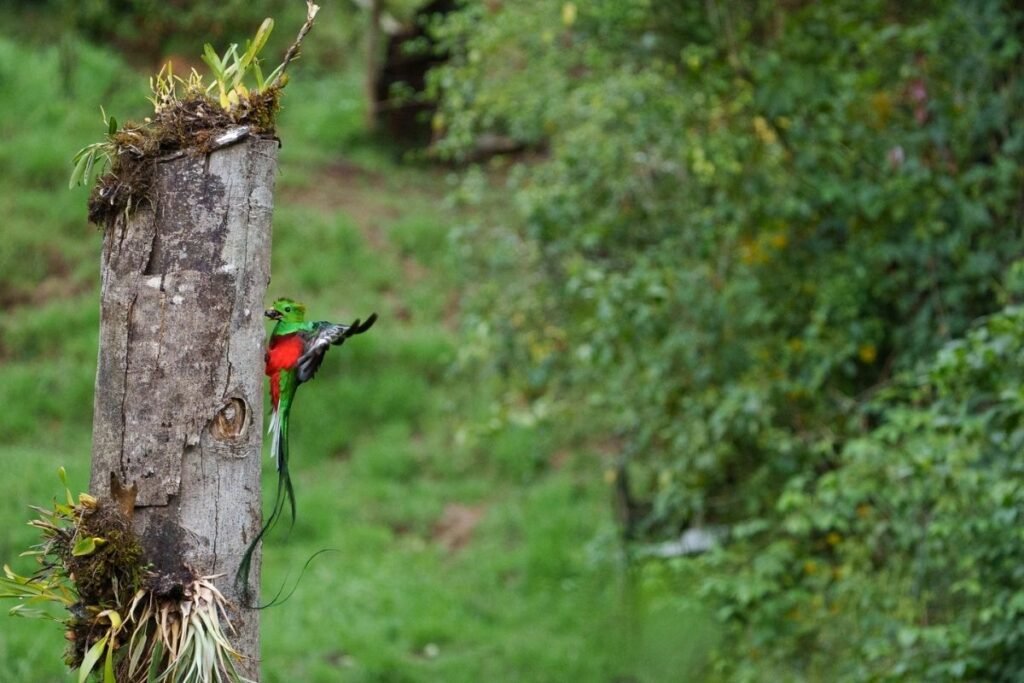
One or two focused night sessions can complement bird and wildlife photography; a dedicated macro program can include more locations and daytime subjects. Physis matches physical pace, experience, dates and photographic goals with appropriate habitat and specialist guidance.
Frequently Asked Questions
Is herping photography safe?
It can be conducted safely with trained local guidance, suitable footwear, lights and strict instructions. Participants should never handle or approach unknown wildlife independently.
What lens is best for frogs and reptiles?
A 90–105 mm macro lens is a versatile starting point. Longer macro lenses provide more working distance, while a telephoto may help with larger or inaccessible subjects.
Are night walks required?
Many reptiles and amphibians are more active after dark, so night walks are central to most herping programs. Daytime macro sessions can add insects, plants and basking reptiles.
Can specific species be guaranteed?
No. Recent weather, habitat and natural behavior determine activity. Local knowledge improves the search but cannot guarantee a wild species or photograph.