
Last updated: November 2026
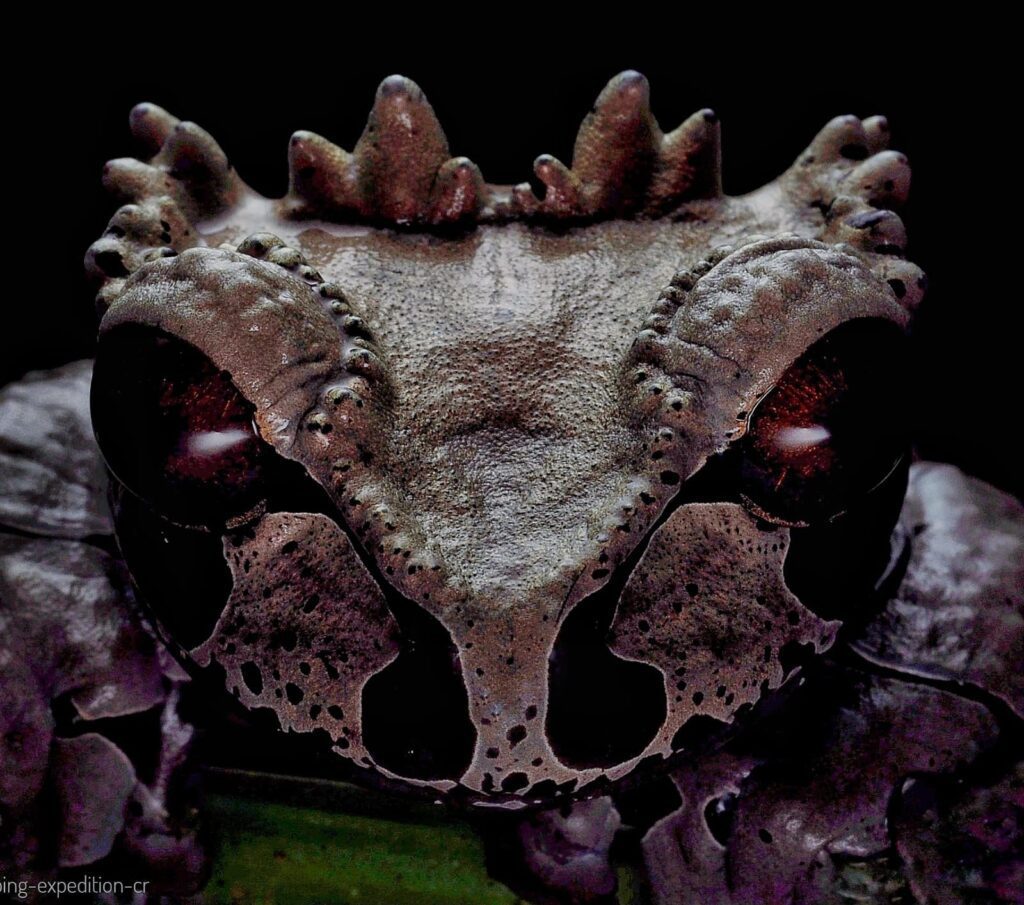
Herping photography in Costa Rica means searching rainforest trails, streams and leaf litter—mostly at night—for frogs, snakes and lizards, then photographing them where they are found. The best results come from the Caribbean lowlands in the green season (May to November), a 90–100 mm macro lens, diffused flash and an unhurried, private pace.
Quick facts
- Where: Caribbean lowlands (Sarapiquí, Boca Tapada), cloud forest foothills and, for some poison frogs, the southern Pacific (Osa and Golfo Dulce).
- When: year-round; the green season (May–November) is usually the most productive for frogs. Glass frogs are easiest to find near streams after heavy rain.
- Time of day: most herping happens after dark; red-eyed tree frogs are typically most active between 9 PM and midnight near standing water. Poison frogs are active by day.
- Lens: 90–100 mm macro for most subjects; extension tubes for very small frogs; a wide-angle macro for environmental portraits.
- Effort: slow walking on wet, muddy trails for two to three hours; rubber boots and a good headlamp are essential.
- Expectations: wildlife is never guaranteed. Encounters depend on season, rain and animal behavior.
What is herping, and why Costa Rica?
Herping is the field search for reptiles and amphibians. Costa Rica is one of the best places in the world to do it with a camera: the country holds more than 400 species of reptiles and amphibians in an area smaller than West Virginia, and many of them live within a short drive of comfortable lodges.
For a photographer, the appeal is control. Unlike birds, most herps let you work slowly: you can choose the angle, shape the light and compose a clean frame—provided the animal is respected and left exactly where it was found.
Which frogs, snakes and lizards can you photograph?
Costa Rica offers dozens of photogenic species; which ones you find depends on region, season and luck. These are the subjects photographers ask about most:
| Subject | Typical habitat | When to look | Photo notes |
|---|---|---|---|
| Red-eyed Tree Frog (Agalychnis callidryas) | Caribbean and Pacific lowland ponds and wetlands | Night, especially rainy months | Side-lit portraits on leaves; watch for eye-shine |
| Glass frogs (Hyalinobatrachium, Sachatamia, Cochranella) | Vegetation over forest streams | Night, after heavy rain | Shoot from below to show translucent skin |
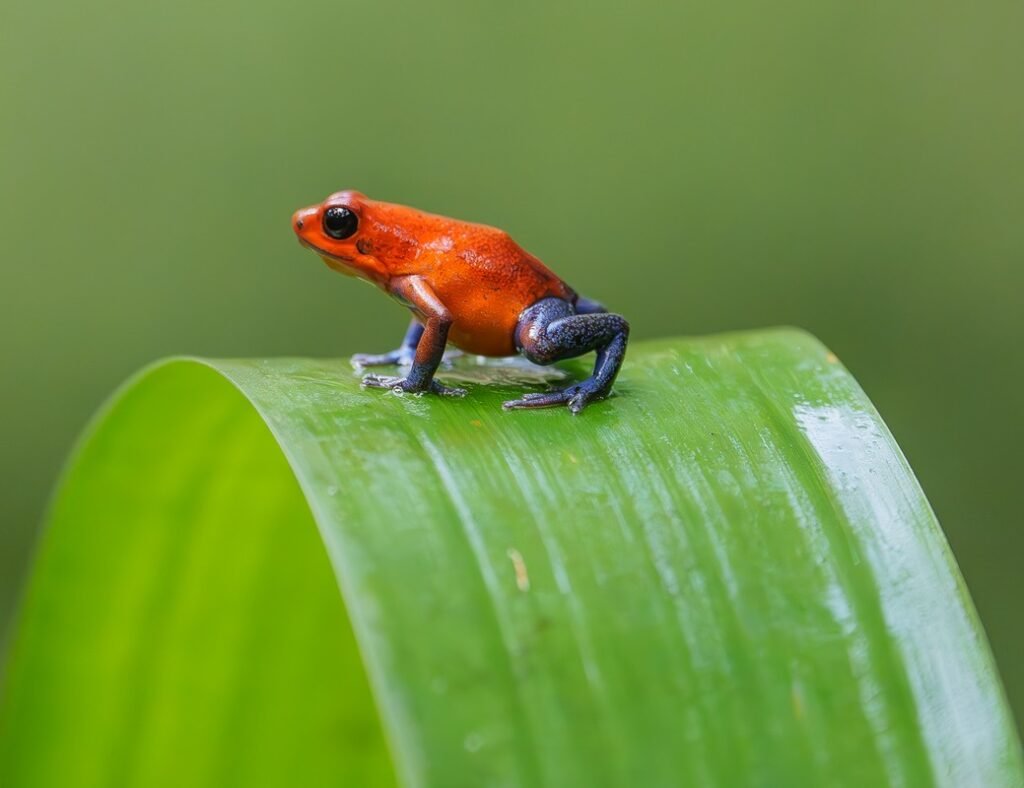
| Strawberry Poison Frog (Oophaga pumilio) | Caribbean lowland forest floor | Daytime | Low angle, soft fill flash |
| Green-and-black Poison Frog (Dendrobates auratus) | Lowland forest on both slopes | Daytime, humid mornings | Natural light plus diffused flash |
| Granular and Golfo Dulce poison frogs | Southern Pacific forests (Osa, Golfo Dulce) | Daytime | Extension of a southern itinerary |
| Eyelash Viper (Bothriechis) | Understory vegetation, lowlands to foothills | Day or night | Work from a safe distance with longer macro |
| Vine snakes, cat-eyed snakes, basilisks, helmeted iguana | Forest edges and streams | Night walks | Environmental frames with wide-angle macro |
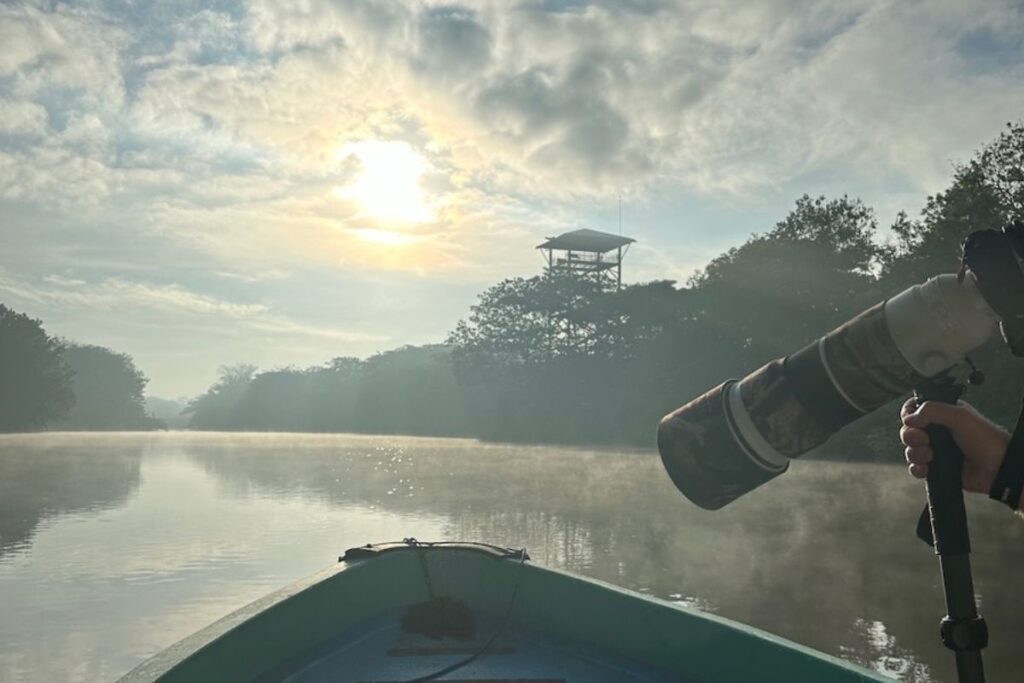
| Spectacled Caiman (Caiman crocodilus) | Rivers, lagoons and wetlands | Night (eye-shine) or boat by day | Telephoto, low to the water |
Rarer species—Central American Bushmaster, Splendid Leaf Frog, coral snakes or the White-faced Salamander—are real possibilities for patient herpers, but they are rare finds and should never be the only reason for a trip.
Photograph frogs and snakes on a private Physis program
Physis designs private, custom-made photography trips in Costa Rica around macro and herping, with local specialists and the right season and light. Programs start from US$4,000.
When is the best time for herping in Costa Rica?
The green season, from May to November, is usually the most productive time for frogs; dry-season nights (December to April) can still be good near streams and ponds.
Rain triggers frog activity and breeding choruses, while snakes and lizards are found year-round. Our month-by-month guide to wildlife photography in Costa Rica explains how seasons affect each region and subject.
What gear do you need for herping photography?
A 90–100 mm macro lens, one off-camera or on-camera flash with a large diffuser, a headlamp with a red or warm mode, and rain protection cover almost everything.
- Macro lens (90–100 mm): the workhorse for frogs and small snakes; it keeps a comfortable working distance.
- Extension tubes: for rain frogs and other very small subjects.
- Wide-angle macro: for vipers or frogs in their rainforest context.
- Telephoto: for caimans, arboreal lizards and anything you should not approach.
- Diffused flash: wet skin and scales reflect hard light; a large diffuser avoids hotspots.
- Rain cover, dry bags and rubber boots: nights in the lowlands are humid and often wet.
For a full packing list, see what camera gear to bring to Costa Rica.
How does Physis approach ethical herping?
Animals are photographed where they are found, with minimal disturbance; nothing is staged, baited or kept.
- In-situ first: if an animal must be moved for safety, the local specialist does it with proper tools and returns it to the exact spot.
- No habitat damage: logs, bromeliads and burrows are not torn apart to find animals.
- Limited flash time: short sessions per subject, especially with frogs.
- Biosecurity: clean boots and hands between sites to avoid spreading chytrid fungus among amphibians.
- Safe distance from venomous snakes: photographers never handle snakes.
From the field
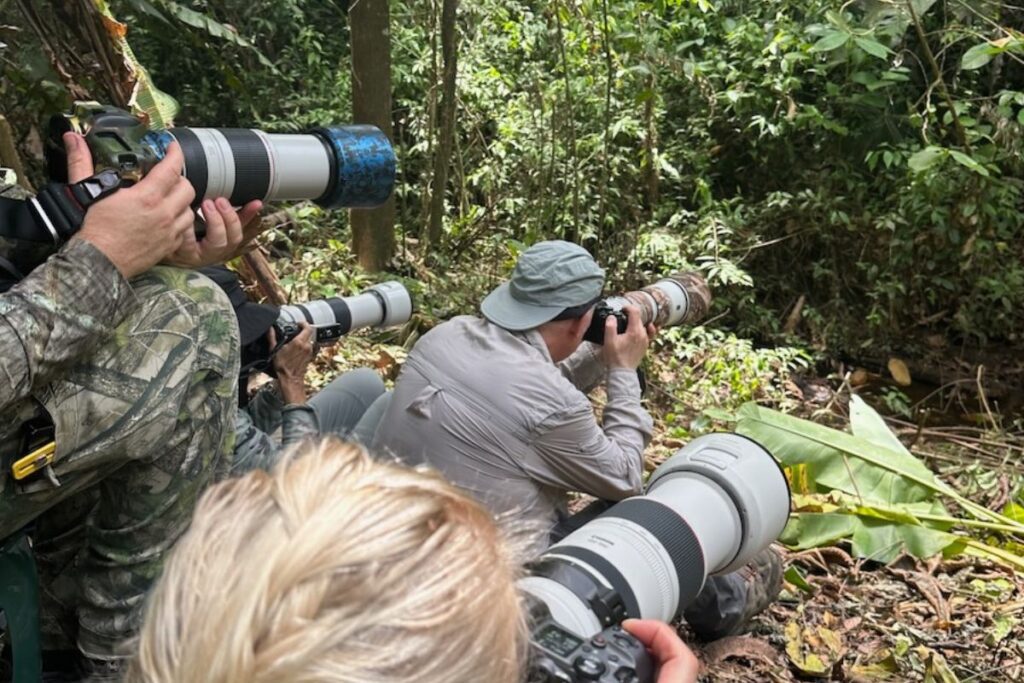
On Physis programs, herping usually sits inside a broader itinerary rather than filling every night. A common structure is daytime birds or poison frogs, a rest in the afternoon, and a guided night walk of two to three hours. Our Macro: Frogs and Snakes Signature Session and the Rainforest Night Walk Signature Session are the two sessions built around frogs, snakes and night photography. Many combine them with lowland birding in Sarapiquí and Guápiles.
How do you plan a herping photography trip?
Decide your priority species, travel in the right season and build enough nights in one or two lowland bases to allow for rain-outs.
Herping rewards staying put: three or more nights in the same area give you several chances at the same streams and ponds. Our 2027–2028 planning guide covers dates, trip length and how to combine regions.
Frequently asked questions
Is herping in Costa Rica safe?
With an experienced local specialist, good boots and a headlamp, night herping is a safe activity. Venomous snakes are present, which is why photographers keep a safe distance, never handle snakes and follow the guide’s lead on every approach. Trails are slow-paced but wet and muddy.
Can I see a Bushmaster or other rare species?
Possibly, but it can never be promised. Bushmasters, coral snakes and some salamanders are rare even for experienced herpers. A private program can add nights in suitable habitat to improve your chances, while keeping the itinerary rewarding if those species do not appear.
Do I need a dedicated macro lens?
A 90–100 mm macro lens is strongly recommended for frogs and small snakes. Extension tubes or a close-up filter can work as a lighter alternative for some subjects, and a telephoto helps with caimans and arboreal lizards.
Can herping be combined with bird photography?
Yes. A private program can combine daytime bird photography with evening herping, especially in the Caribbean lowlands, where birds, frogs and snakes share the same forests.
Start planning your herping photography trip
Tell us which species and Signature Sessions you want in your private program. Physis will propose dates, regions and lodges that fit your photography. Programs start from US$4,000.